October was another busy month for the Medford Historical Commission, with two meetings scheduled around Indigenous Peoples’ Day. At our October 5th meeting, the Commission held Preferably Preserved hearings for 15 Maple Park Avenue (the Hegner Center) and 71 Mystic Avenue, and accepted a new demolition application for 141 Grant Avenue. At our October 19th meeting, we held the Preferably Preserved hearing for 73 Surrey Street, found 141 Grant Avenue significant, and reviewed two new applications on Salem Street and Main Street. That evening the Commission also heard from the City’s Veteran Services Department about the American Legion property on Winthrop Street, chose a focus area for the next round of survey grants, and shared updates on zoning, Medford High School, and Cross Street Cemetery.
October 5, 2026 Meeting Agenda
October 19, 2026 Meeting Agenda
Demolition Review Applications:
Determinations of Significance Summary: In September the Commission found 71 Mystic Avenue and 73 Surrey Street significant, joining 15 Maple Park Avenue (the Hegner Center), which had been found significant earlier. This month we held Preferably Preserved hearings for all three properties. We also received three new demolition review applications. 141 Grant Avenue was accepted on October 5 and found significant on October 19. On October 19, 360–362 Salem Street was passed on review, and the application for 387–389 Main Street was accepted, with significance to be determined at a future meeting.
| Meeting Date | Address | Outcome | Vote |
|---|---|---|---|
| October 5 | 15 Maple Park Avenue (Hegner Center) | Not Preferably Preserved | 0–4 |
| October 5 | 71 Mystic Avenue | Not Preferably Preserved | 0–4 |
| October 5 | 141 Grant Avenue | Application accepted | 4–0 |
| October 19 | 73 Surrey Street | Not Preferably Preserved | 1–4 |
| October 19 | 141 Grant Avenue | Significant | 5–0 |
| October 19 | 387–389 Main Street | Application accepted | 5–0 |
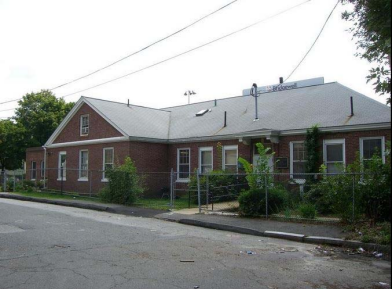
15 Maple Park Avenue “The Hegner Center” (October 5): After being tabled in September, the Preferably Preserved hearing for the Hegner Center went forward. The building had been found significant earlier, when a Community Preservation Act application was considered for roof, window, and door work; that application was later withdrawn, and no CPA funds were awarded. The building was built by the Dyer Company. Michael Dyer was one of Medford’s most prolific architect-builders of the early 20th century, responsible for City Hall and a number of downtown buildings, and he followed closely in the footsteps of Charles Dunham. Before I-93 came through, the site served as Medford High School’s athletic facility. The building has been vacant for years, and no reuse plans came with the City’s application. Several abutters spoke in favor of demolition, describing the building as an eyesore and a safety concern. Commissioners noted that the building would likely need significant investment to reimagine it to serve a new use since it has sat vacant for so long. The motion failed 0–4.
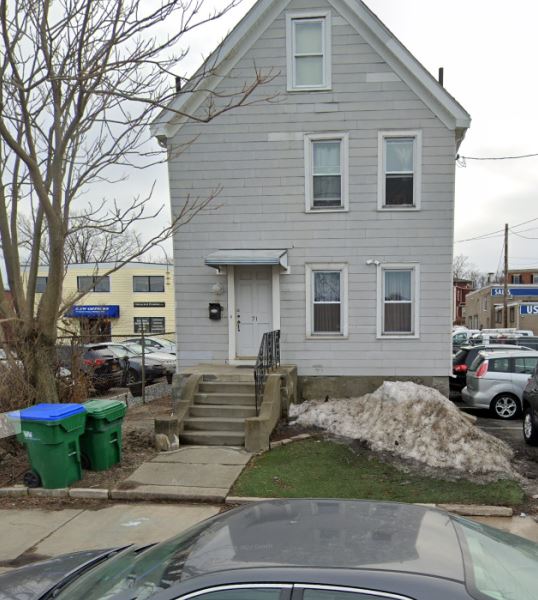
71 Mystic Avenue (October 5): Found significant in September, this house is the last residential building along a long commercial stretch of Mystic Avenue, and buildings from before 1875 are increasingly rare in Medford. The applicant, which plans a self-storage and ground-floor retail development, presented with its historic preservation consultant. They showed that the house was built after the Middlesex Canal closed and has lost most of its historic features, including its front porch (visible on historic Sanborn maps), original siding, windows, doors, and interior details. Commissioners compared it with nearby 41 Mystic Avenue, which remains under demolition delay but ultimately the motion failed 0–4.
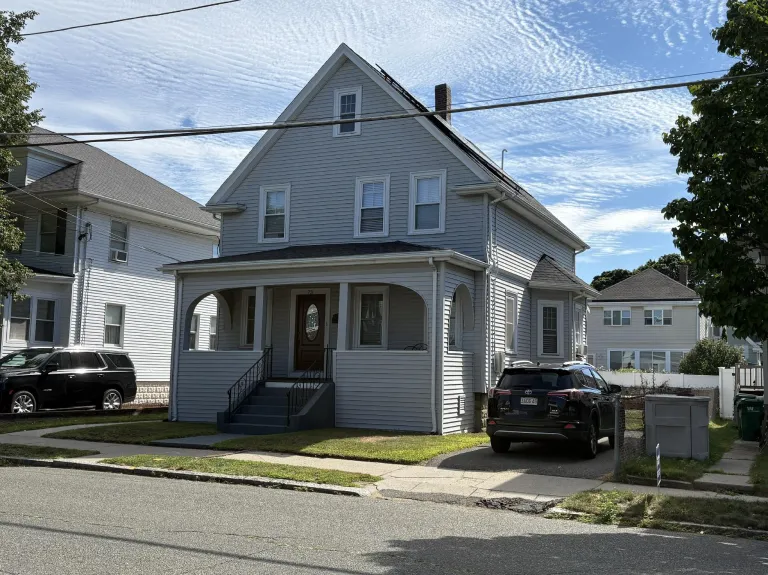
73 Surrey Street (October 19): This hearing was originally set for October 5 but was moved to October 19 because the owner’s sign and legal ad were not in place in time. Having found the house significant in September, the Commission held a public hearing to decide whether the proposed demolition would be detrimental to Medford’s historic resources. This is the second step in the City’s two-step demolition delay process. The project is a large rehabilitation. It brings the front of the house forward about two and a half feet over the porch, extends the three-sided side bay up to the roofline, and adds a large rear addition. Commissioners generally found the design sympathetic. It keeps the arched porch openings that define this neighborhood, carries over the eave returns and stepped cornice described in the MHC Form B, and restores divided-light windows. The motion to find the building Preferably Preserved failed 1–4, so the project was released. The owners were offered a voluntary meeting with the Commission’s demolition delay subcommittee to work through the suggestions discussed in the meeting.
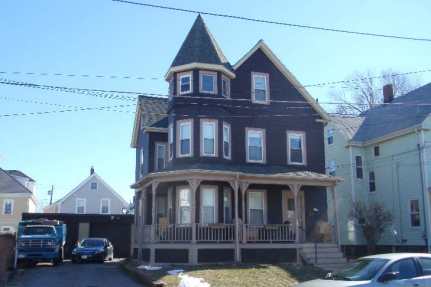
141 Grant Avenue (October 5 and October 19): The Commission accepted a late demolition application for this property on October 5 so that significance could be determined on October 19th. The house sits in East Medford, and is a beautiful, surviving example of Victorian architecture from this period. Originally built by the Hall family who began developing in the late 19th century, trustees took over the land and built out the neighborhood street by street from Medford Square toward Spring Street through the 1870s, 1880s, and 1890s when the Halls fell into bankruptcy. Development accelerated once the streetcar came through on Salem Street. 141 Grant Avenue is one of the few 19th-century houses remaining on a street and it is one of only a couple of nearby homes with a turret – an octagonal architectural bay that sits to the home’s left-side and extend like a tower through the roofline. New research identified its likely builder as John Payne, who came to Medford from Canada as part of a broad wave of Canadian working-class builders who helped build neighborhoods across the Northeast. On October 19, commissioners found the house significant 5–0. A Preferably Preserved hearing was scheduled for the November 9th meeting.
360–362 Salem Street (October 19): The existing building is a 1916 commercial block proposing full demolition. The Commission had already given design feedback on this project during the Community Development Board’s site plan review, and the CD Board approved it after several productive design meetings. Because the design had already been reviewed, the Commission voted 5–0 to pass on review so the project could move forward.
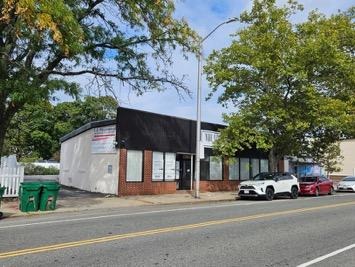
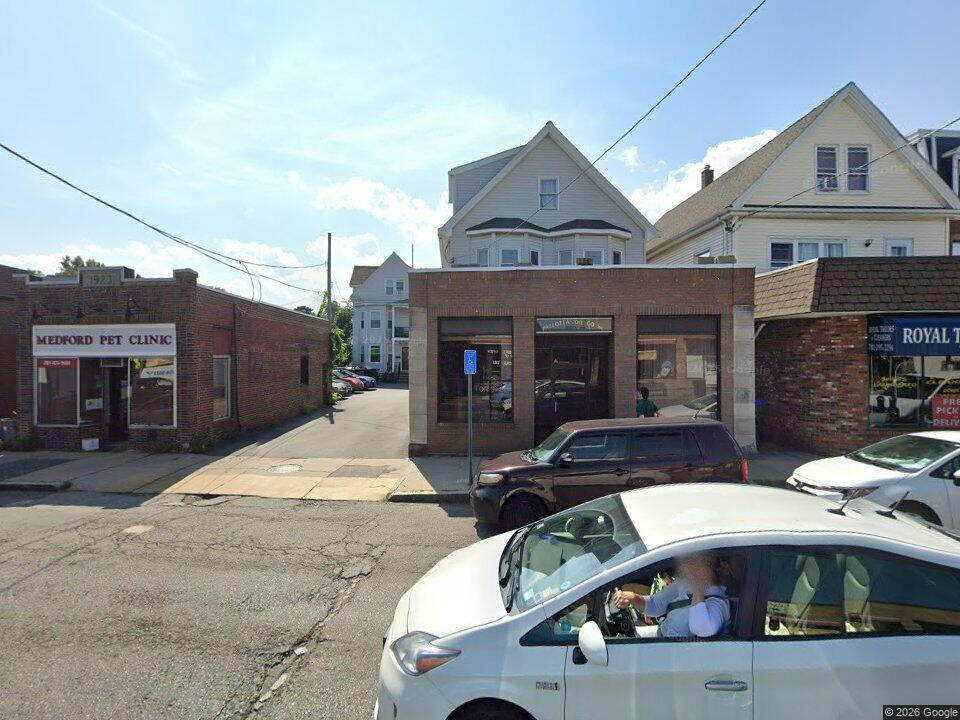
387–389 Main Street (October 19): The Commission accepted a demolition application for this 19th-century building with a 20th-century storefront. The proposal demolishes the rear building and builds new. An MHC Form B was ordered, and significance was set to be determined at a future meeting.
Potential Future Projects:
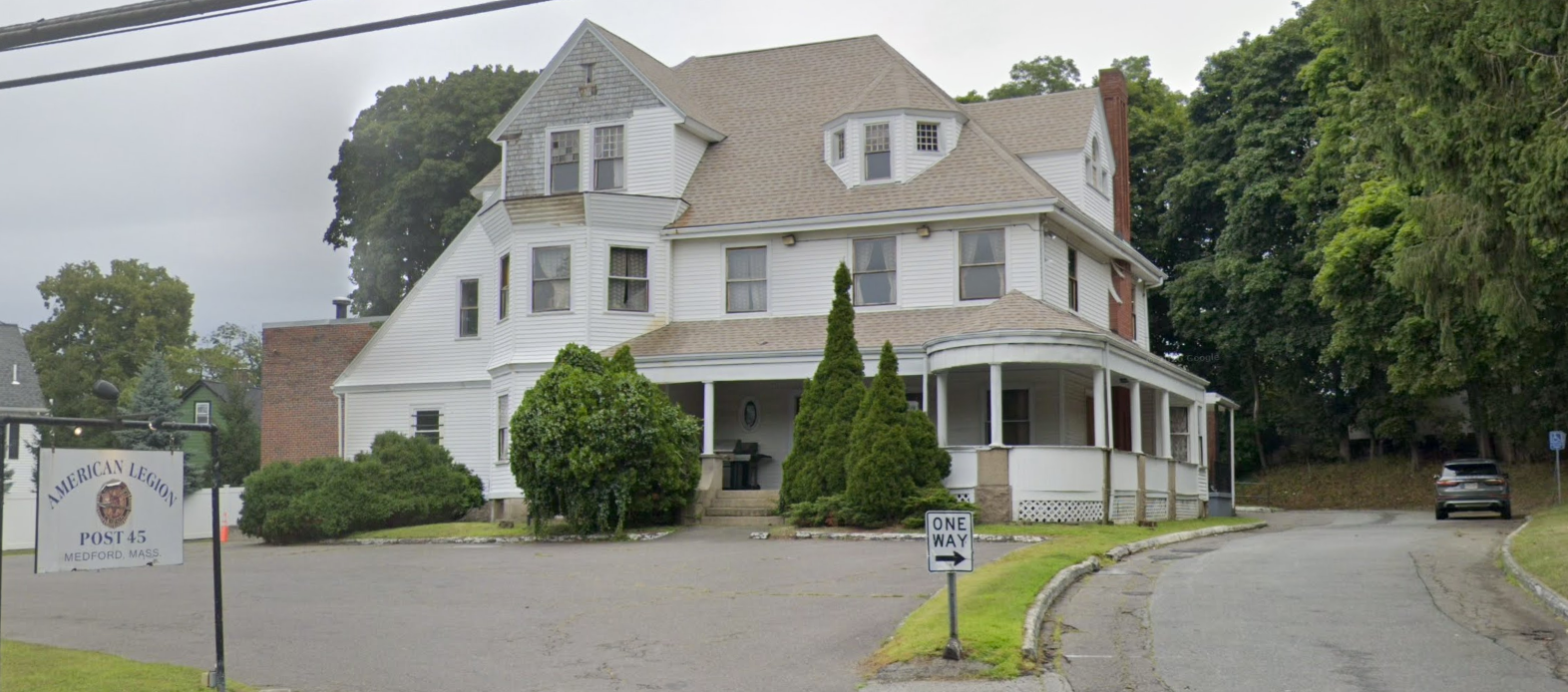
321 Winthrop Street “American Legion Post 45”: Following the Commission’s September discussion, the City’s Director of Veteran Services and the Commander of the American Legion post presented their plans for the property. They hope to demolish the existing 19th-century mansion on the site in favor of building a facility for transitioning veterans. The original plan was to create the home inside the existing Victorian mansion which is about 10,00 square feet. However, a feasibility study by Suffolk Construction found the house structurally unsound and too costly to repair. The current plan is to replace the mansion with a new building of about 9,900 square feet, while the rest of the Legion facility stays intact. Next steps included a site visit and completing the updated MHC inventory form.
Ongoing Project Updates:
The following updates were shared at the October 19 meeting.
Survey and Planning Grant: The Commission chose a focus area for its next survey and planning grant application: the residential neighborhoods north of Medford Square. This area includes the Lawrence Estates, developed by Willard Welch near Samuel Crocker Lawrence’s home, along with the Forest Park development and another Hall family development near Lawrence Road and Forest Street. These neighborhoods have almost no survey coverage. The Lawrence Estates is especially well preserved and, unlike the duplex neighborhoods south of the river, was built almost entirely as single-family homes. A grant cycle can produce up to about 130 inventory forms. This continues 16 years of citywide survey work that began in 2010; before that, Medford’s last citywide survey dated to 1975. Anyone curious about surveyed buildings can explore the state’s MACRIS maps, or email the Commission to ask whether a form exists for a property.
The Hastings Heights survey was on pause while the Massachusetts Historical Commission reviewed the inventory forms. The Brooks Estate neighborhood survey was being prepared to go out to bid.
Zoning Update: Work continued on zoning language that would give developers incentives, such as waived parking requirements and added height, for preserving and adapting historic buildings. Under the proposal, projects using these incentives would come to the Historical Commission for design review before going to the Community Development Board. This would let the Commission identify important buildings proactively, instead of reacting only when a demolition permit is filed. The language was still being finalized, was to come to the Commission first, and was intended to apply citywide.
Medford High School – Section 106 Review: The Commission was still waiting on the school’s construction records from the late 1960s and early 1970s to help consultants finish the MHC Form B.
Cross Street Cemetery: Photos of the restoration work at the relocated Cross Street Cemetery at Oak Grove were posted to our website. The stone wall was complete, the restored gate was due back soon, and a replacement for a missing veteran’s stone was underway while the contractor sourced matching marble. Ground-penetrating radar was scheduled for the day after the meeting at both the relocated cemetery and the original site, with results expected by the end of the month. The results were expected to show whether the front grassy area at the relocated cemetery holds burials, and to inform plans for the original site, including a possible secondary memorial for those who could not be relocated. Any future exhumation would require special approval from the state legislature, and that planning was expected to take place over the winter.
Next Meeting:
The Commission set its next meeting for Monday, November 9, which was to include the Preferably Preserved hearing for 141 Grant Avenue.
Preservation efforts in Medford are an ongoing process of research, review, and collaboration with property owners, city staff, and the broader community. We encourage residents to stay involved by attending meetings with us, staying up to date with our project updates, or sharing what they know about historic properties in their neighborhoods with us.

