October Agenda

Our October monthly meeting will be Monday, October 19, via Zoom. The agenda is below, and includes all Zoom info.

We will be reviewing 3 applications for demolition – at 120 Jerome St, at 116 Dover St and 15 Hadley Place – and determining historical significance for a large Queen Anne home in the Wellington area, at 202 Middlesex Avenue.

If you follow us on Facebook, you’ll have seen my recent post about Elinor, a young woman who lived in Medford in the 1930s and kept a diary. That diary has been found by a young woman living in the Boston area NOW and she publishes Elinor’s entries on Instagram – along with photos and a little background research about the names and places mentioned in the diary.

WELL!!

It looks like Elinor may well have spent the summer of 1933 at 202 Middlesex Avenue! In that summer, Elinor lived with a family she calls “Uncle Roy” and “Aunt Shirley,” or “The Robbinses” and she describes many of their local outings and adventures, including an evening “running walk” around the Fellsway and Wellington Road. Furthermore, according to our surveyors’ Form B on 202 Middlesex Ave,

“Henry Lyman Cornell (1852-1935) was a music teacher and vocal musician of opera. Little could be ascertained about his career through readily available records, but several brief newspaper accounts suggest he was actively performing in Boston as a basso during the 1880s. In 1900 the household, identified as 202 Middlesex Avenue, included his wife, Harriet Sophia (Withington, 1849-1940), whom he married in 1874, three sons, and three daughters born between 1879 and 1899. In 1930[…] the household included his daughter, Shirley (b. 1880) and her husband Leroy H. Robbins (b. 1880), a real estate broker.”
Spoiler Alert!

Medford’s current Demo Review process is not likely to be a surprise or an exceptional burden for homeowners or developers. 

Most Massachusetts communities, from Boston to Woburn and beyond have a demo review process similar to that in the City of Medford. A property owner would be hard pressed to “leave Medford” and buy a property nearby that does not need to follow this, or a similar process, before being demolished. Similarly, a developer – someone whose business it is to redevelop properties – would not likely buy in Medford, Arlington, Woburn, etc and not know that older buildings will be subject to a demo review process by the town or city. 

On our website, we describe the demolition review process in our city, and at the bottom of that page you can review the demolition policies of our neighboring towns and cities.

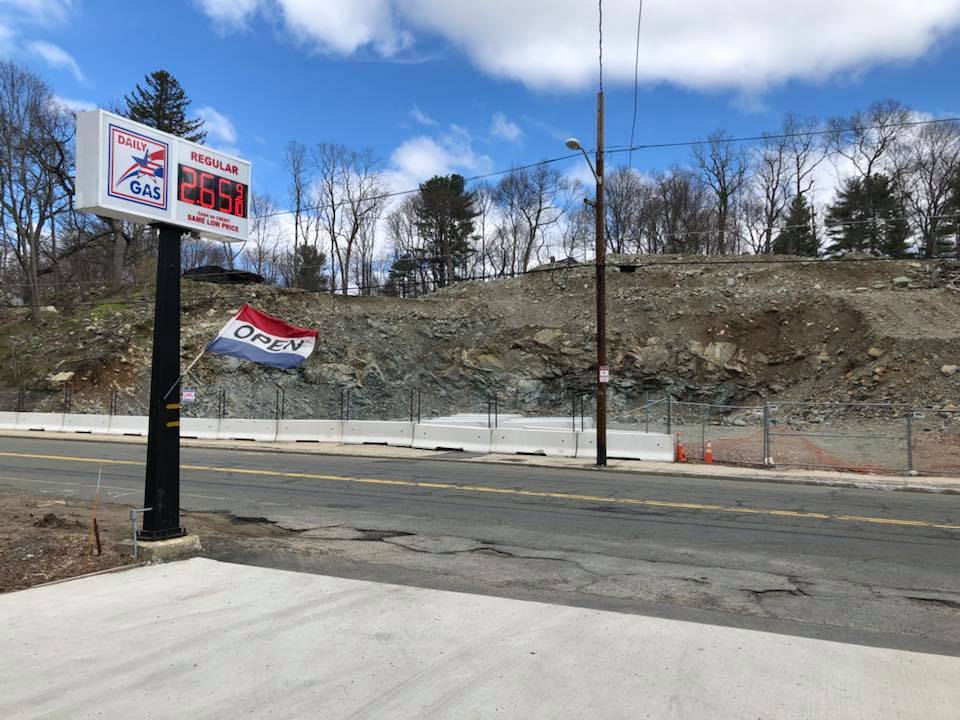
Demolition Site on Winthrop Street

For information on the homes demolished on Winthrop Street site above, and the famous folks who had lived there, read more here!!

This is the fourth post in a series of Clarifications & Corrections. See also:

“Pro-Active Preservation,” about our ongoing survey and inventory research.

“Kissing Cousins”, which explains the different roles of the Historical Commission, the Historical Society and the Historic District Commission.

And “Are We Anti-Development?” about the big picture directive of the Medford Historical Commission.

Are we “anti-development?”

The Historical Commission’s goal is NOT to fully restore houses to their historic state – we are not here to recreate Sturbridge Village or Plimoth Plantation in the heart of Medford. Nor are we, personally or professionally anti-development – the commission includes historians, archivists and homeowners, as well as architects, folks in real estate, and building preservationists. You can read our bios here.

US! off-duty at Salvatore’s


If we’re not planning to turn Medford into a history theme park, what are we up to?

NOT US! a photo of a Plimoth Plantation wedding, via Boston Globe

The Medford Historical Commission, like most Historical Commissions in towns and cities across Massachusetts, is part of city government. Our procedures were put in place to allow the community to bring their preservation concerns to our public meetings, with developers present. During these discussions, we increase public knowledge about the historic uses of our buildings, neighborhoods and residences, about the city’s past residents, and about the past design and construction of the buildings in our city. And, finally, for buildings deemed both “historically significant” AND “preferably preserved” – a multi-step, public process – we discourage demolition in favor of designs that preserve the historic character.

Monthly Meetings – Our meetings are the second Monday of the month, and they were traditionally held in Room 201 in City Hall; like most of Medford’s city boards and commissions, we’ve been holding Zoom meetings since May 2020. The public is always welcome to listen in or speak up!!

Agendas & Minutes – Our agendas are posted in City Hall, and in the Transcript, and we try to post them on Facebook and here on the website.

This is the third post in a series of Clarifications & Corrections. The first post in the series was “Pro-Active Preservation,” about our ongoing survey and inventory research. The second was “Kissing Cousins” and it explained the different roles of the Historical Commission, the Historical Society and the Historic District Commission.

Demo Application: 202 Middlesex Avenue

The Medford Historical Commission has received an application for the partial demolition of the Queen Anne Victorian house located at 202 Middlesex Avenue. Located in the Wellington neighborhood, the building is a large and ambitious example of the types of buildings erected during the earliest development. Large lots were laid out for white collar commuting individuals but the proximity to the Boston and Maine Railroad enticed the working classes to round out the neighborhood. Constructed largely between 1880 and 1920, the Wellington area contains some of the finest examples of single family residences anywhere in the City. In addition, the house has an excellent social history which roots the occupants firmly to the fabric of the area. We will review the building for significance.

202 Middlesex Avenue, an excellent example of Queen Anne Victorian architecture.
202 Middlesex Avenue Carriage House

“Gut Rehab” Concerns

If you’ve noticed an older property in your neighborhood that’s been *almost entirely* demolished in the renovation process and you’re wondering what’s up, you are not alone. Your Historical Commission has also been concerned about this trend in Medford development.

Below, see the full text of our recent letter to the Mayor on this issue –

A recent example on West Street, in the Hillside neighborhood.

Long story short, we’re worried that “the Building Department has rubber-stamped applications for building permits in a manner which has permitted property owners and developers to circumvent mandatory demolition review by the Historical Commission.”

If you have concerns as well, or examples from your neighborhood, please be in touch with us, or contact the mayor to support our letter!

Preferably Preserved: 43 Pleasant Street

The Historical Commission held its third Zoom public meeting last night. The primary business was a decision regarding 43 Pleasant Street, a house built before 1850 and located in area now known as “Old Ship Street” on the National Register of Historic Places.

The commission found the house “preferably preserved.”

When a building is found to be “preferably preserved” an 18 month delay of demolition is imposed, to give the applicant time to consider sale, renovation, reuse, relocation and other alternatives to demolition. The applicant is invited to return to the Commission’s upcoming public meetings to present plans and alternatives, and to discuss the preservation concerns that their neighbors and the commission have. If a plan is developed that addresses the concerns of the public and the commission, a demolition delay may be lifted before the 18 month period.

Thanks to the Medford residents who wrote in, or attended in person, to voice their opinions for and against the preservation of this building.

43 Pleasant Street

At our June meeting on Monday the Historical Commission will determine whether the house at 43 Pleasant Street is preferably preserved, and in need of a delay of demolition.

At our May meeting, an application for demo permission was submitted by the owners of 43 Pleasant St in East Medford. This property falls within the boundaries of the Old Ship Street – our shipbuilding district – which is on the register of National Historic Places. However, this designation (unlike the Local Historic District designation) does not protect buildings in the area from demolition.

It does mean that the building has already been determined to be “historically significant.” Thus, our June meeting will proceed to the second step of the process, and we will determine whether or not the building is preferably preserved.

A copy of our surveyors’ Form B with a history of the building and its inhabitants is here.

The meeting will be Mon June 9 and full Zoom instructions are below –

The meeting will be held remotely via Zoom and to view and participate in this hearing please use the following:

Access this meeting via Zoom remote videoconferencing:
Join Zoom Meeting: https://zoom.us/j/94922681587

Call in via phone:
One tap mobile: +19292056099,,94922681587# US
Dial in: +1 929 205 6099 US Meeting ID: 949 2268 1587

Access livestream:
The meeting will also be live streamed at https://medford.vod.castus.tv/vod/index.php/@live:ch3.
To participate while watching the livestream, questions and comments may be emailed during the hearing to HistoricalCommission@Medford-MA.gov. For information regarding this hearing, please visit www.medfordhistoricalcommission.org. Comments may be submitted prior to the meeting in writing to HistoricalCommission@Medford-MA.gov.

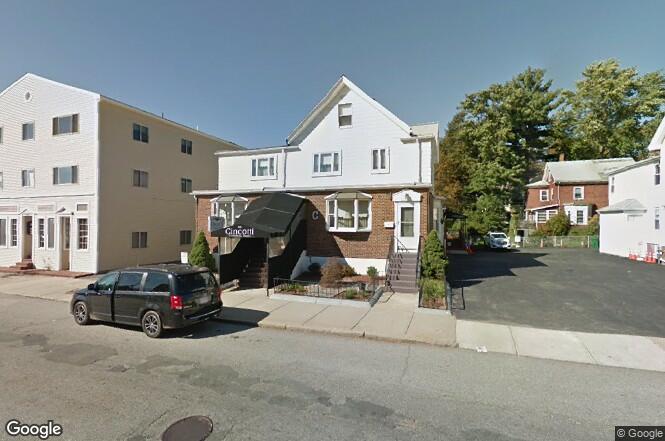
Cincotti’s Redevelopment Plans

We’ll be discussing the redevelopment plans for 421 High St (formerly the location of Cincotti Funeral Home, in West Medford) at our upcoming November meeting. Public input has been important to the process so far, and the current version of the developer’s plans are available here –

 417-421 High Street Plans

The rest of the meeting agenda isn’t finalized yet, but our November meeting will be held on Monday, Nov 18 at 7 PM in City Hall Room 201; it’s a week later than usual because of the Veterans’ Day holiday.

Street View of 421 High Street

A Google street view of the Funeral Home.

According to the report from our architectural historians, the building was a large single-family home until the 1950s, when it became the property of Concetta Cincotti, “daughter of Italian immigrant Ciro Cincotti (1883-1963), who operated a funeral home first in Boston’s North End, and later moved the business to Medford.”  Historical Commission members walked through the building this fall, and although the interior has some interesting details, the building is, inside and out, “heavily altered,” as the Form B (below) puts it.

421 High Street MHC Form B

NOT Historically Significant: 96-102 Winchester St

Classic New England Dairy Delivery

At our October meeting, the buildings at 96-102 Winchester St, near Ball Square, were found to be NOT historically significant and a demo permit was granted.

Whiting Milk
Photo from the collections of the Wisconsin Historical Society, dated 1961

But the garages at 100 Winchester St were once part of an extensive and long-running commercial dairy operation –

The Whiting Milk Company, active between 1857 and 1973, was one of New England’s first distributors of milk and dairy products door-to-door. It was established by David Whiting (born 1810) in 1857. Whiting’s father, Oliver, owned a large farm in Wilton, New Hampshire. “With the advent of the railroad to Wilton, Mr. Whiting [David] inaugurated operations in the milk contracting business for the Boston market…”

milk map
Map from the USDA publication, “The Milk Supply of Boston” 1898

The firm was carried on by his son Harvey Augustus Whiting (1833-1903) and grandsons Isaac Spalding, George, John Kimball, David and Charles Frederick (1875-1972); Charles Frederick used his Harvard (1897) and MIT training to manage the dairy in a modern sanitary manner. Under the direction of David Whiting’s grandsons, the company merged with C. Brigham and Elm Farm Milk (both included in above map) to form a new corporation that, according to the Cambridge Chronicle of 1922, “employs more than 1000 persons and is one of the largest milk distributors in the country.”

In the 1950s, H.P. Hood and Sons and the Whiting Milk Company competed for the majority of the Boston milk market; the photo of the Whiting’s Milk truck at the top of the post is dated 1961. But the business of delivering milk and other dairy product suffered a national decline, due to increased consumer mobility because of automobiles. The company went into bankruptcy in 1973.

Still, most commissioners felt that the history of this company was not reflected in, or represented by the structures on the property at 100 Winchester St. Information above was adapted from the Form B for Winchester St_96-102.

Demo Application: 96-102 Winchester St

At our September public meeting, the Medford Historical Commission received an application to demolish the buildings at 96-102 Winchester St, in South Medford near Ball Square.

MHC Form A for 96-102 Winchester Street

The Commission will post additional information to this page as review of this demolition proceeds.

streetview

The owner has already applied to demolish 104 Winchester (pictured above) and a demolition delay of 18 months has been imposed on that property, to give the applicant time to consider renovation, reuse, relocation and other alternatives to demolition.