As we’ve mentioned here before, the Historical Commission is often asked for “site review” comments on potential redevelopment projects. Three of our commissioners attended a site visit at 970 Fellsway (near Amaranth and Myrtle Streets) last week and took these lovely photos.
But why all the beautiful parquet brickwork at this old Glenwood industrial site across the street from BJs? What’s the story and is it worth preserving?
Plans are available for public comment through the Office of Community Development at Medford City Hall.
If you missed our November info meeting about the Brooks Park, or if you just want to take in all that information more slowly, we now have the presentation slides available to share!
Richard Iron, a masonry preservationist gave an analysis of the present condition of the Old Slave Wall (with photos), and some general history of bricks and brickmaking in New England (with bricks!).
We’ve set our 2020 Meeting Dates – the Commission will continue to meet on the second Monday of every month (except October, when we meet on the third Monday) at 7 PM in Room 201 of City Hall.
January 13
February 10
March 9
April 13
May 11
June 8
July 13
August 10
September 14
October 19*
November 9
December 14
The next meeting of the Medford Historical Commission is Mon, Dec 9 at 6:30 PM in City Hall. Agenda is available here! We’re starting a little earlier than usual.
We’ll also be reviewing our ongoing neighborhood survey, and our CPC projects. If you haven’t given us your thoughts on improving the Thomas Brooks Park, please do! Our survey questions are here, too – Thomas Brooks Park Survey
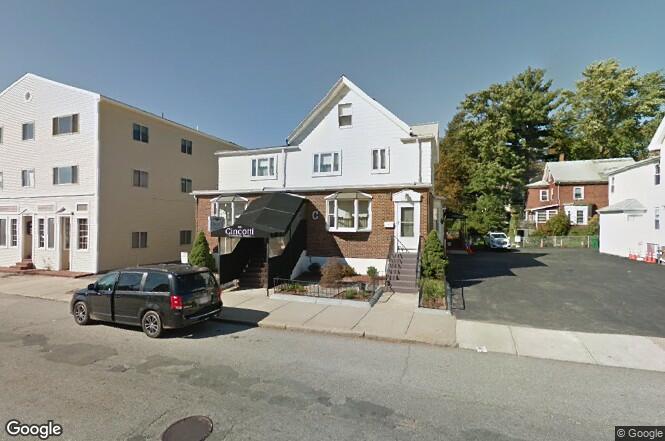
We’ll be discussing the redevelopment plans for 421 High St (formerly the location of Cincotti Funeral Home, in West Medford) at our upcoming November meeting. Public input has been important to the process so far, and the current version of the developer’s plans are available here –
The rest of the meeting agenda isn’t finalized yet, but our November meeting will be held on Monday, Nov 18 at 7 PM in City Hall Room 201; it’s a week later than usual because of the Veterans’ Day holiday.
A Google street view of the Funeral Home.
According to the report from our architectural historians, the building was a large single-family home until the 1950s, when it became the property of Concetta Cincotti, “daughter of Italian immigrant Ciro Cincotti (1883-1963), who operated a funeral home first in Boston’s North End, and later moved the business to Medford.” Historical Commission members walked through the building this fall, and although the interior has some interesting details, the building is, inside and out, “heavily altered,” as the Form B (below) puts it.
The Historical Commission was awarded a CPC grant for a design plan for the Thomas Brooks Park and its principal feature, The Old Slave Wall. With community input, we want the park to become a beautiful and meaningful addition to Medford’s historical landmarks.
Please, tell us what you think in this short survey!
Image from the Historical Society’s Glass Plate Collection
At our October meeting, the buildings at 96-102 Winchester St, near Ball Square, were found to be NOT historically significant and a demo permit was granted.
Photo from the collections of the Wisconsin Historical Society, dated 1961
But the garages at 100 Winchester St were once part of an extensive and long-running commercial dairy operation –
The Whiting Milk Company, active between 1857 and 1973, was one of New England’s first distributors of milk and dairy products door-to-door. It was established by David Whiting (born 1810) in 1857. Whiting’s father, Oliver, owned a large farm in Wilton, New Hampshire. “With the advent of the railroad to Wilton, Mr. Whiting [David] inaugurated operations in the milk contracting business for the Boston market…”
Map from the USDA publication, “The Milk Supply of Boston” 1898
The firm was carried on by his son Harvey Augustus Whiting (1833-1903) and grandsons Isaac Spalding, George, John Kimball, David and Charles Frederick (1875-1972); Charles Frederick used his Harvard (1897) and MIT training to manage the dairy in a modern sanitary manner. Under the direction of David Whiting’s grandsons, the company merged with C. Brigham and Elm Farm Milk (both included in above map) to form a new corporation that, according to the Cambridge Chronicle of 1922, “employs more than 1000 persons and is one of the largest milk distributors in the country.”
In the 1950s, H.P. Hood and Sons and the Whiting Milk Company competed for the majority of the Boston milk market; the photo of the Whiting’s Milk truck at the top of the post is dated 1961. But the business of delivering milk and other dairy product suffered a national decline, due to increased consumer mobility because of automobiles. The company went into bankruptcy in 1973.
Still, most commissioners felt that the history of this company was not reflected in, or represented by the structures on the property at 100 Winchester St. Information above was adapted from the Form B for Winchester St_96-102.
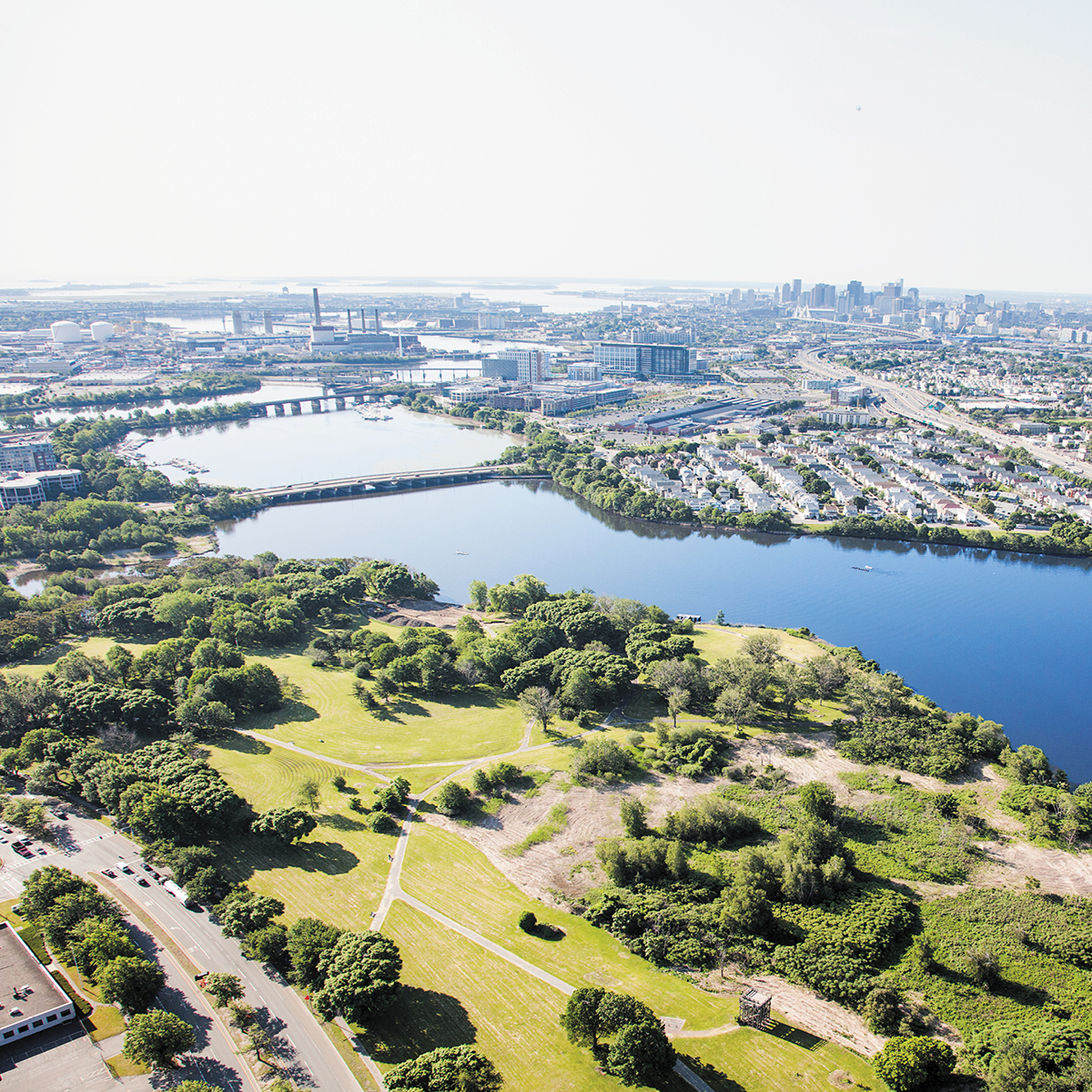
The Office of Community Development has also recently asked the Historical Commission for feedback on plans for a residential development at 4000 Mystic Valley Parkway, directly across from the MacDonald Park.
The developers have submitted their MassHousing application form for Site Approval for a “Chapter 40B” residential development, and a copy of this application goes to the City of Medford. Application, with plans, here.
MacDonald Park, photo via The Boston Globe.
Plans are available at City Hall Office of Community Development, where the public can review them and submit comments.
Medford’s Office of Community Development (OCD) regularly asks the Historical Commission for Site Review comments on redevelopment throughout the City of Medford. The OCD also asks for comments from the Fire Department, the Department of Public Works and the City Engineer, the Building Commissioner, the Conservation Commission, the Office of Energy and Environment, and the Superintendent of Public Schools.




 Medford Historical Commission