October Meeting Materials

Salutations and greetings on this fine fall day! The Medford Historical Commission has an early meeting on October 6, 2025. The agenda is included below so you can follow along. Meeting materials that the Commission will review are available further down in this post.

10 Irving Street – Public Hearing
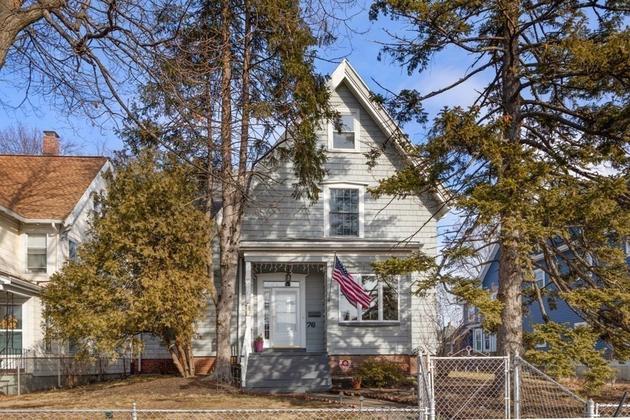
The Commission will hold a public hearing to determine if the demolition of 10 Irving Street would be detrimental to the historic resources of the City of Medford. We do so by determining if the building is preferably preserved. This structure is Italianate in nature. Its large form suggests it is an earlier building that was moved to the site. The Commission will review the information in the Form B and hear public comments to determine if the building is preferably preserved.
41 Mystic Avenue – Determination of Significance
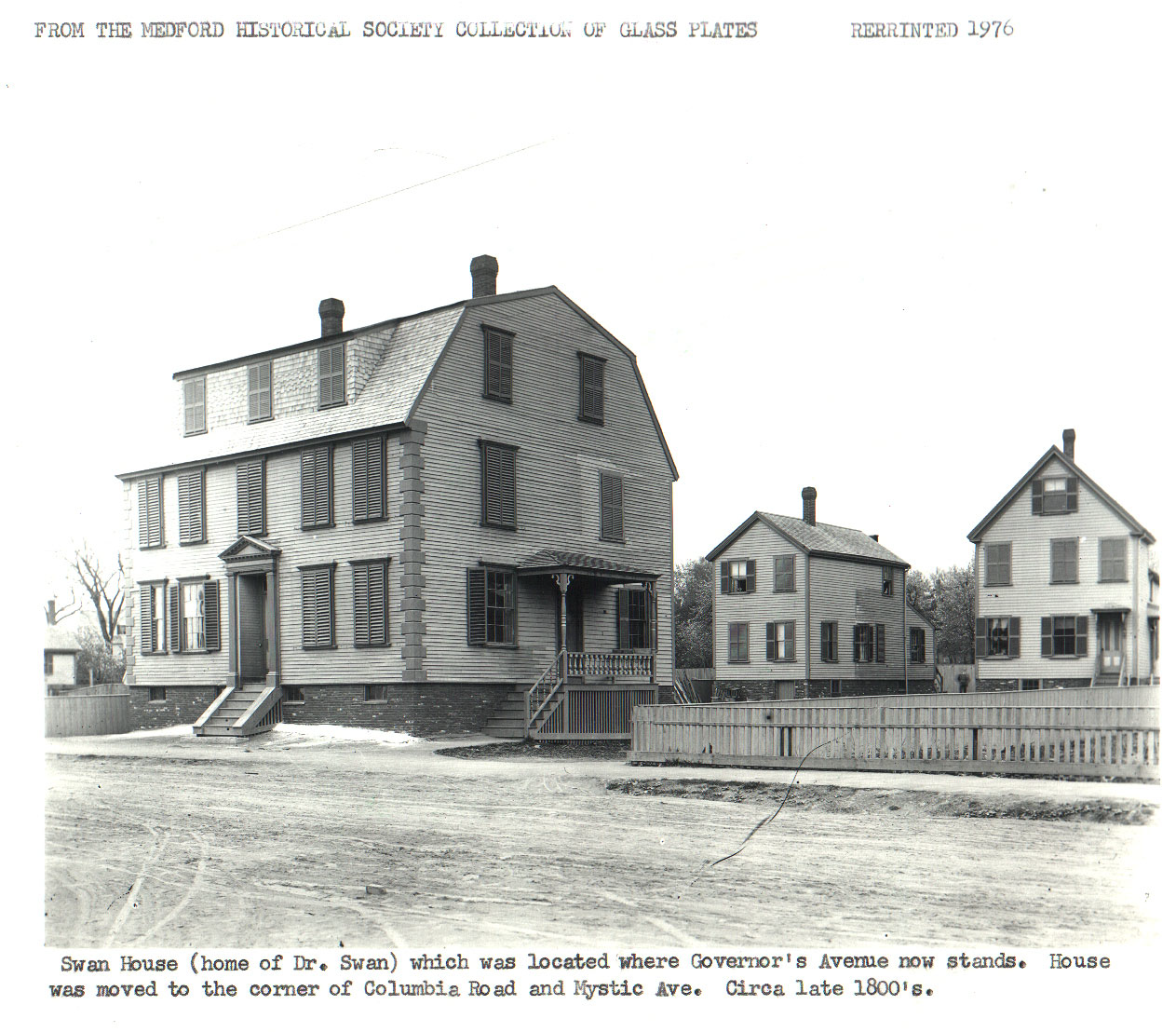
An application for demolition has been received for 41 Mystic Avenue. We will review the building for significance. The Benjamin and Hepzibah Jones Hall House was surveyed as part of the Medford Square South Project. This building is one of twelve surviving eighteenth-century buildings remaining in the City.

121 Second Street – Determination of Significance
An application for demolition has been received for 121 Second Street. The Commission will review the information in the MHC Form B and determine significance. This is an early 20th century resource with some surviving original details. The building is slated for total demolition to be replaced by a duplex.

Upcoming Demolition Reviews:
Although they did not make it to the agenda in time, there are two applications that will be received by the Commission. The first is 6 Hobbs Road, which proposes major renovations to a 20th-century residence in West Medford. The other is 58 Myrtle Street, which is being remodeled extensively to the point where the original structure will no longer be distinguishable.

Old Business:

The Commission will continue its meeting with the various monthly updates on projects underway.

Vacancies: We are still looking for new members. Please reach out to us if you are interested in serving on our board.
Historic District Commission Updates: Nothing at this time.
Properties Under Delay: No update at this time.
Form Bs: We received the Form B back from consultant John Clemson for the Kappy’s Building. We always try to share this information so that it is useful during planning discussions.

Thomas Brooks Park
We’re pleased to announce we’re looking for volunteers for a second dig planned this fall. See our announcement for more information. With that underway, we can turn our attention to bidding the tree work. We secured a large amount of money to prune many of the historic trees in the park. We are looking to partner with the Planning Department, Parks, and DPW to collaborate efforts to make the green canopy safe. Work will happen in the winter when the vegetation is gone so any deadwood can be seen and removed. This is a pruning exercise and removal of the dead trees. We are hoping to replant a handful of the native trees in the spring. Once that major task is bid, we will return to looking at the sidewalks and crosswalks with the DPW and Engineering.

Hastings Heights Survey:
The Survey and Planning Project has gone out to bid. Procurement will release the documents on Monday, and responses are due in early November. If the City can turn around a contract quickly, work can begin in mid-November and extend through September of next year.

We will end our meeting with the approval of meeting minutes. As always, if you have questions, comments or concerns, please don’t hesitate to email us!

May Meeting Materials

Today is a wonderful mid-spring day and the perfect time to update the community on our meeting on May 13, 2024. Our agenda has been posted to our website. Be sure to download it and review all the items the Commission plans to review. You can find the agenda by clicking here!

27 Almont Street Public Hearing
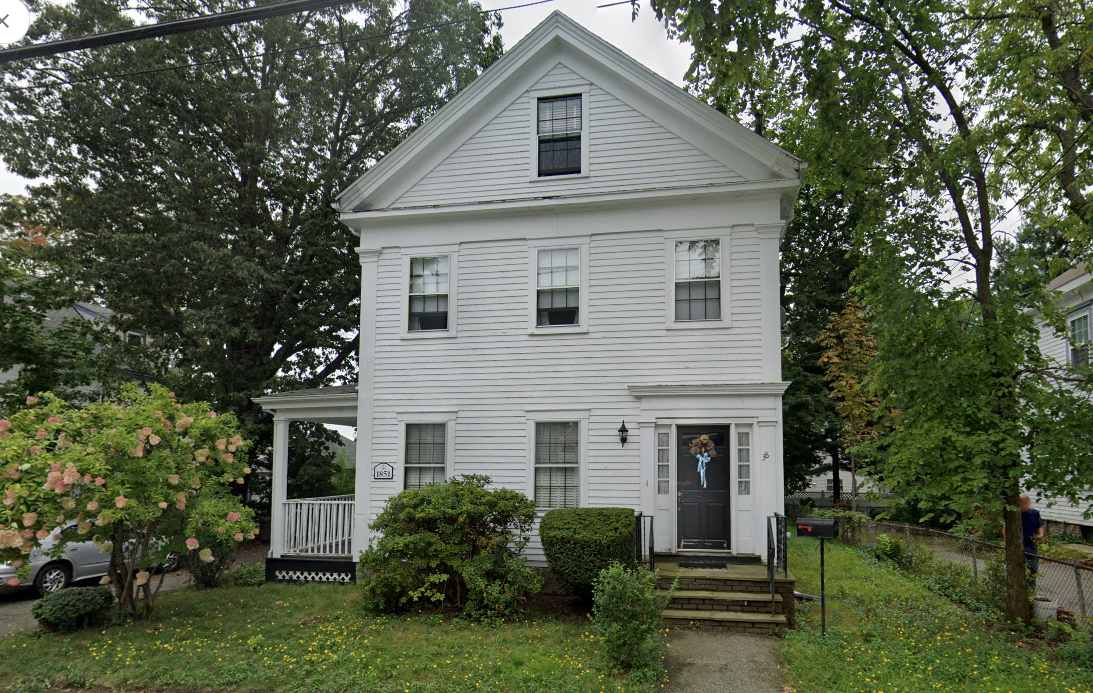
The Historical Commission will hold a Public Hearing to determine if the demolition of the well-preserved pre-1855 building at 27 Almont Street is detrimental to the historic resources of the City of Medford.

The Commission views this type of building as a rare and diminishing resource in our built landscape. We encourage residents to voice their opinions on if the preservation of this building is important to the community. You can learn more about the building by reading the MHC inventory form, and the determination of significance letter included below:

Determinations of Significance

The Commission will determine the significance of the following buildings:

  • 18 Wedgemere Road
  • 9 Trout Avenue

As a reminder, our definition of significance is as follows:

As set forth in Section 48-78, a significant building is any structure, or a portion thereof, which is not within a local historic district subject to regulation under the provisions of MGLA c. 40C, but which:

  1. Has been listed in or is the subject of a pending application for listing in the National Register of Historic Places; or
  2. Has been listed in the Massachusetts Register of Historic Places; or
  3. Was built within 75 years or older and which is determined by the commission to be a significant building as provided by subsection 48-78(d) either because:

                a. It is importantly associated with one or more historic persons or events, or with the broad architectural, cultural, political, economic, or social history of the city or the commonwealth; or

                 b. It is historically or architecturally important in terms of period, style, method of building   construction, or association with an important architect or builder, either by itself or in the context of a group of buildings.

The Commission has inventory forms for each of the buildings and will utilize that information to make the determination. The forms are included below.

New Demolition Applications
Following the public hearing, the Commission will receive demolition applications for the properties located at:

  • 85 Morton Avenue

The Commission will have an MHC inventory form prepared for this building to learn more about it’s history and prepare to determine significance next month.

The Commission will also receive the application for partial demolition of the building located at 38 Pearl Street. This historic pre-1855 building has an MHC inventory form. It is also part of an area documented on an MHC form A. Both are included below.

The Commission will also receive the application for the fire-damaged building at 3-5 Pleasant Street. This building is a National Register property and as a result, it is automatically significant. The Commission will move right to a public hearing held next month to determine if the building is preferably preserved.

Site Plan Reviews

The Commission has two site plan reviews on the agenda. One is for 400 Mystic Avenue, and the other 280 Mystic Avenue. Details of the projects will be conveyed at the meeting and the Commission will review the projects and provide feedback as requested.

Ongoing Business

The meeting will conclude with an array of updates on existing projects that are moving forward. Be sure to listen in on all the great stuff that’s happening.

As always, we encourage residents to submit comments in advance of the meeting. The Commission receives these items and does read through them. They are entered into the record as well. Looking forward to seeing you there!

A celebration at Medford City Hall in the mid-20th century.

August Business

At our August meeting, we received an application for a demo permit for 11 Orchard Street. This begins the demolition review process – next month we will assess the building’s historical significance. 75-77 West Street had also applied for a demo permit this month but they will not need to continue the review process; we reviewed their plans and the developer is doing interior renovations, not exterior work.

We also voted to lift the demo delay at 76 Sharon Street, where the developer created plans that preserved much of the historic character of the home. This property was found to be Preferably Preserved earlier in the year.

There was also some discussion of the house at 16 Foster Court; built between 1804 and 1814 it is one of Medford’s earliest surviving examples of a New England Cape Cod. The previous developer, who had been before the commission in 2019, has sold the property and redevelopment plans are now unclear.

We also discussed the Site Plan Reviews we are preparing for the Office of Planning, Development & Sustainability, for redevelopment at 595 Broadway (a residential building) and 162 Mystic Avenue (Medford’s cannabis dispensary).

Although a historic property on Canal Street is currently in the midst of the demo review process and has been on the agenda, the owner did not post their “demo permit applied” yard signs to alert neighbors, so the Preferably Preserved vote must be postponed until September.

Finally, we introduced Kit Nichols, who will become a new member of the Historical Commission, replacing Abigail Salerno who left the commission earlier this year.

May Meeting Materials

We have a busy month coming up and we want to make sure that information is readily available to the general public so they may submit comments at or in advance of the meeting on May 9. In this post, you will find the MHC forms for the various demolition delays, as well as some updates on projects that we are working on with applicants already under delay. Our agenda has been posted on our website. If there are questions or comments, please do not hesitate to reach out. Comments always welcome in advance of the meeting and may be submitted via email or regular mail (via City Hall).

Public Hearing – 69 Jerome Street:

69 Jerome Street as seen from the sidewalk. The building was constructed by noted designer and builder Moses W. Mann of West Medford.

The Commission will hold a public hearing to determine if the partial demolition of 69 Jerome Street is detrimental to the resources of the City of Medford. Information for the property can be found below:

Click here for the neighborhood overview for West Medford from the Survey Plan.

Determination of Significance:

The Medford Historical Commission will determine significance of the following properties:

130 Boston Avenue:

52 Allston Street:

232 Fulton Street:

146 Summer Street:

Site Plan Review4054 Mystic Valley Parkway:

The Commission will be receiving and accepting the demolition application for the Bertuccis building at 4054 Mystic Valley Parkway. We have also been invited to comment on the proposed development. The industrial brick building was constructed c. 1945 as a potato factory and has undergone a number of transformations over the years. The Commission will be determining significance at the June meeting. In the meantime, you can read the form below.

The public should be aware that information about the proposed development, which is currently undergoing review by other boards, can be found on the City of Medford’s website.

4068 Mystic Valley Parkway:

4068 Mystic Valley Parkway – the WEEI Radio Transmission Station. Built in 1936, it is one of the oldest radio buildings in the Commonwealth.

We commissioned this form in response to proposed development located at 4054 Mystic Valley Parkway. The WEEI building is an important example of Art Decco architecture. It is still used as a radio broadcast station and has been recommended for listing on the National Register of Historic Places.

Coming Up for Review:

The Commission will be accepting applications for the demolition of the following properties:
– 20 Otis Street Carriage House
– 76 Sharon Street
– 136 Boston Avenue
– 4054 Mystic Valley Parkway (already mentioned above)
Information and Forms will be posted before the next meeting.

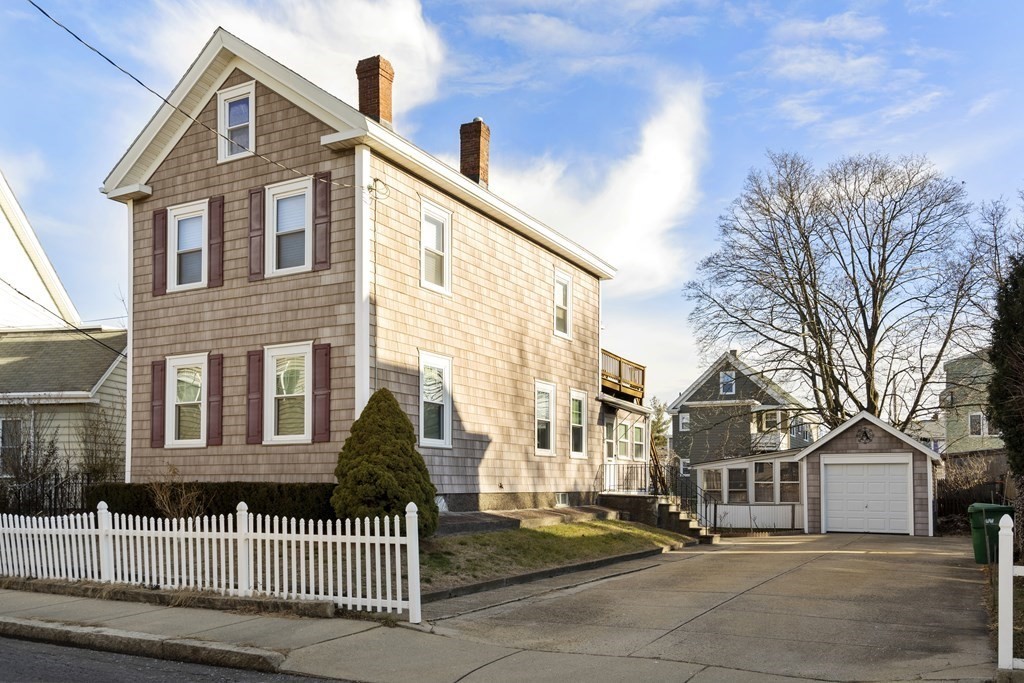
76 Sharon Street, an intricate nineteenth century Victorian building slated to altered beyond recognition and subject to review under the demolition delay ordinance.

Demolition Delay Committee Updates:

78 Cotting Street: The demolition delay subcommittee provided initial comments to the owners of 78 Cotting Street. The owner’s architect has made changes which seek to mitigate the demolition proposed for the building. The Commission invites the public to review the proposed plans and provide feedback, either in advance of, or at the meeting. The latest version is at the bottom of this list.The Commission will then review the next steps, if any, for the project.

July Agenda

We will be determining the historical significance of properties whose applications for demolition were submitted last month – including properties in Hillside and Haines Square. Zoom details in the agenda.

109 Forest Street Application Materials:

109 Forest Street as seen looking toward the northeast in 2019 prior to the construction of the new houses in the rear and right yards.

The Medford Historical Commission has received an application for a partial demolition of the building located at 109 Forest Street on the corner of Webster Street. The Commission has previously reviewed this building which has since been sold. The proposal calls for the demolition of a porch and new construction on one side, therefore burying one facade. The building is subject to review under the demolition delay ordinance. A determination of significance has already been made for this property and as a result, it has moved directly to a public hearing to determine of demolition of the building will be detrimental to the City of Medford.

7 Vine Street Application Materials:

The Medford Historical Commission has received an application for the partial demolition of 7-9 Vine Street in East Medford. An 18th century building, the structure is one of a handful which maintains a true period gambrel roof. The building has been heavily altered and is slated to be altered beyond recognition which has prompted a demolition delay review for this property.

MHC Form A for Washington Square Area which includes information on 7-9 Vine among others

Click here for the neighborhood overview for East Medford from the Survey Plan.

33 Vine Street Application Materials:

Like the above property, 33 Vine is a building slated to be altered beyond recognition. The building is a nineteenth century parlor bypass structure. The form was developed in the Boston area and employed extensively in the refined homes of Medford.

30 Dearborn Street Application Materials:

This house is a great example of a classic American Bungalow. It represents a growing community in the early 20th century.

Potential Demolition: 23 & 31 South Street

The Medford Historical Commission had a request to discuss the possible demolition to two buildings on South Street, numbers 23 and 31, to accommodate a new apartment building. The Commission discussed the process with the potential purchaser and provided the inventory forms prepared for the properties as part of the Medford Square South Neighborhood Survey project. These inventory forms provide an architectural description and historic narrative on which the Commission bases its review during the demolition delay review. The proposed building plans are included for the public to become familiar with the potential project.

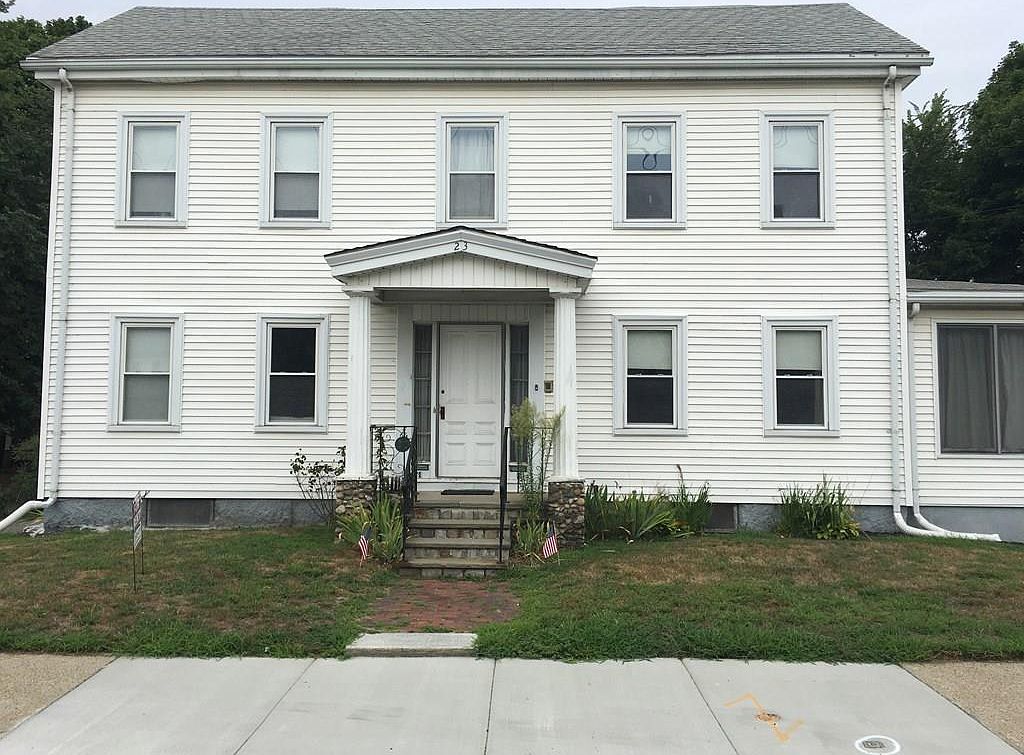
23 South Street – the Richardson – Hayes House. Although hidden behind vinyl siding, the building is a center entrance Greek Revival which matches others along the street.

Comments on 280 Mystic Ave

The 40B development proposed for Mystic Ave has been getting a lot of attention, and public comments have been extended for two weeks. Please contact the Office of Community Development with yours! To read ours, click below –

Because the project is 40B, Combined Properties can, effectively, bypass the demo review process of the Historical Commission. The MassDOT Sign Shop might not look like much now, but the building is older than 75 years and it’s a solid brick building, where fabrication work – for signs used on our roads state-wide – was done for many years.

History at 970 Fellsway (pt 2)

Harry Posner’s Paper Box Empire 

In the early 20th C the factory buildings of the New England-Anderson Brick Works (which had seen various tenants in the meantime), were taken over by the Worcester Paper Box Company. This company produced paper packaging for a wide range of household products including sugar, tea, coffee, and shoes. Founded in 1914 by Harry Posner, the company had been located in Worcester before its move to Medford. Posner (1881-1962) was born in Mohilev, Russia and emigrated to the United States in 1900, fleeing the pogroms. He first moved to New York, and then to Worcester, where a friend loaned him money to start a company making shoeboxes. After moving his business to Medford in 1927, Posner and his wife Hannah lived at 104 Traincroft Road, off High Street. 

Posner was honored in 1938 by President Franklin Roosevelt for his “enlightened labor policy.” Posner’s paper box company helped to finance workers’ homes and their children’s educations, among other employee benefits. In the 1940s, Posner founded Medford’s Combined Jewish Appeal, which he chaired for over two decades. In 1953 Posner made international news with a $1 million donation, earmarked for medical education, to Tufts University, one of the largest donations that university had ever received. He explained then that the gift was “part payment of the blessings we enjoy in this land of freedom an opportunity.”  By 1958 his company employed over 300 people at the Medford plant, and later that year Posner bought the buildings of the New England Bedding Company, next door.

The buildings of the New England Bedding Company formerly housed the Glenwood Dye Works, a second turn of the century factory still standing today on the site of the planned 970 Fellsway redevelopment. 

Posners Tufts

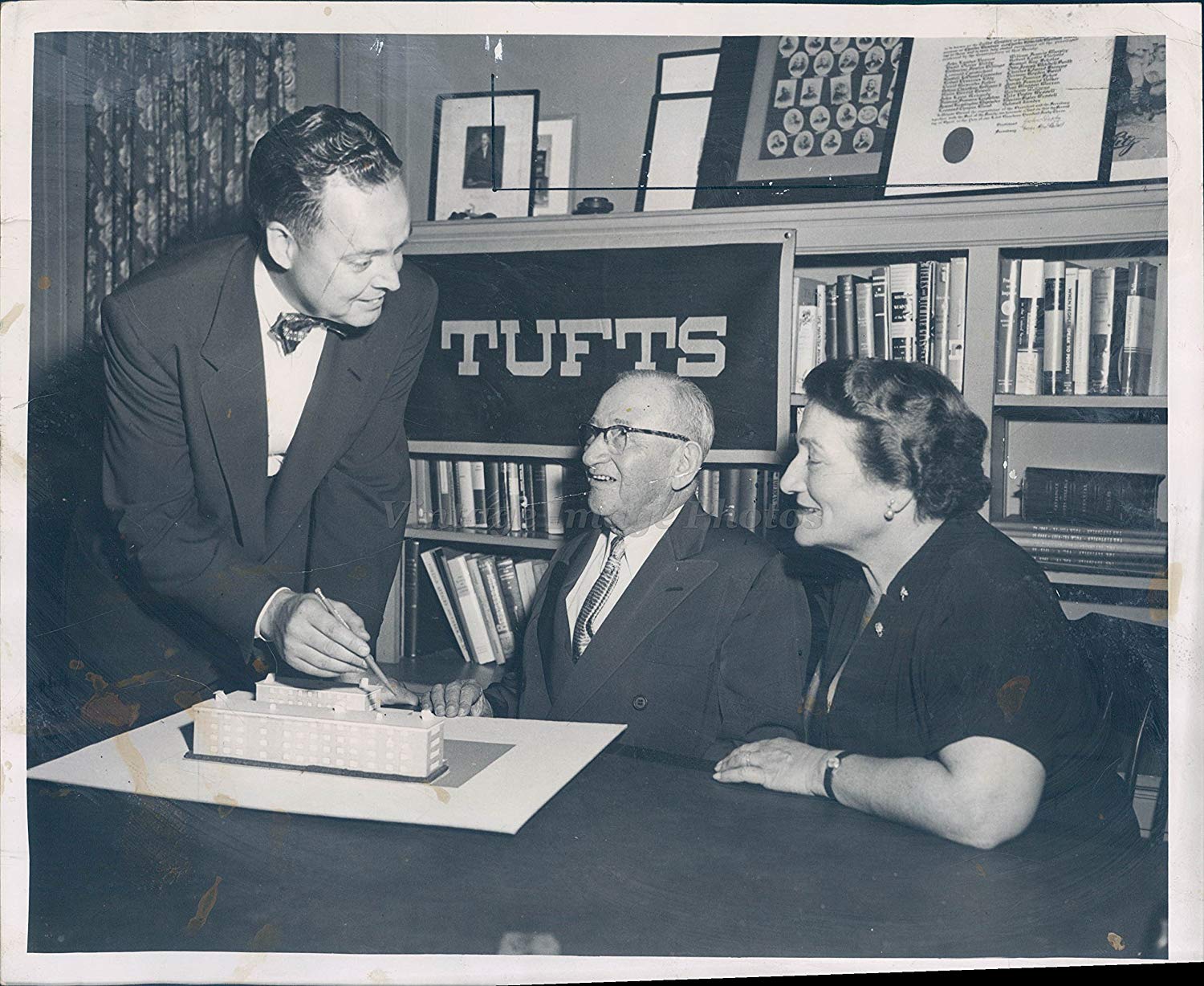
Tufts President Nils Y. Wessell,displays a model for the Posner Hall dormitory at the Tufts Medical School, for Harry and Hannah Posner, c. 1954

The additional 130,000 square feet of the former Glenwood Dye Works allowed the company to remain in Medford during a period of expansion and transition. In March of 1961 Posner’s company was acquired by the Federal Paper Board Company and once merged, Federal Paper Board called the Medford plant one of their “most efficient and well organized units, serving some of our finest and largest customers.” Federal Paper Board, founded in New Jersey in 1916, had aggressively expanded throughout the twentieth century by buying numerous mills and factories. The company was listed on the New York Stock Exchange in 1953 and growth continued apace. The Medford facility was one of several purchased in 1961; in addition Federal Paper Board constructed the world’s largest paperboard mill in Sprague, Connecticut that same year. 

The Federal Paper Board Company’s earnings were seriously affected by the 1970s oil embargo. This combined, in 1977, with poor weather conditions and a drop in wood pulp prices. That year the company shuttered two of its carton plants – the Medford, Massachusetts plant and one in Pennsylvania. Around 500 people lost their jobs between the two closures. After Federal Paper Board’s departure, the complex was converted for use by numerous smaller businesses and is still in use today.

History at 970 Fellsway (pt 1)

Pressed Brick & Dog Fights 

The first major industrial building in the Glenwood area was the 1886 construction of the New England-Anderson Pressed Brick Works (970 Fellsway). 

That company was founded in 1877 by James C. Anderson of Chicago; the Medford plant was opened in 1886. The company was well known in the 1880s, a period marked by its innovative use of architectural brick work. Anderson credited itself with developing products that were “full of artistic beauty and capabilities” out of a material more commonly associated with plain buildings. Anderson brick was said to have been used on some of the best buildings of the period, including over 100 buildings in New England, and was well known throughout the US and in Europe.

pressed brick

The Medford facility, which employed 75 workers in 1889, was one of three of the Anderson Company – the other two were in Chicago and New York. At their three plants, the Anderson Company produced a total of over 300,000 bricks a day in the 1890s, through a highly mechanized system they developed in-house. Green, unburned bricks were led through a series of tunnel kilns, heated by a perpetual fire fed by crude oil and hot enough to melt steel. The Glenwood facility alone contained eight steam-powered kilns. The quantity of bricks produced in this manner represented a major fuel efficiency over conventional brick production. 

The New England-Anderson Pressed Brick Works followed a robust brick-making tradition already established in this part of Medford. Brick production took place here as early as the mid seventeenth century, and it was Medford’s chief business for over a century during the colonial period. By the nineteenth century the Bay State Brick Works, later the New England Brick Works, produced tens of millions of bricks annually at a large plant on the western side of Riverside Avenue. 

But the New England-Anderson Brick Works seem to not have occupied the Glenwood buildings long. A newspaper report in 1896 referred to empty buildings in the area. In fact, the vacant factory had attracted the attention of the police, who broke up a major dog-fighting ring in the building in March of that year. The factory’s distinctive architecture, consisting of a large room adjoined by many small windowless kilns, provided numerous hiding places that hampered the police in their effort to pursue the criminals. 

Forty-four people were arrested in a raid on the facility and one was shot and fatally wounded while trying to escape. The dogs, still fighting at the time of the raid, could not be separated or subdued and were also killed. All arrested pleaded guilty and were fined between $20 and $25. Two years later the complex was property of the Attleboro Savings Bank.

To be continued . . .

(Most of this history is taken from our surveyor’s Form A for the Glenwood Industrial Area, available here.)

Comments on 970 Fellsway

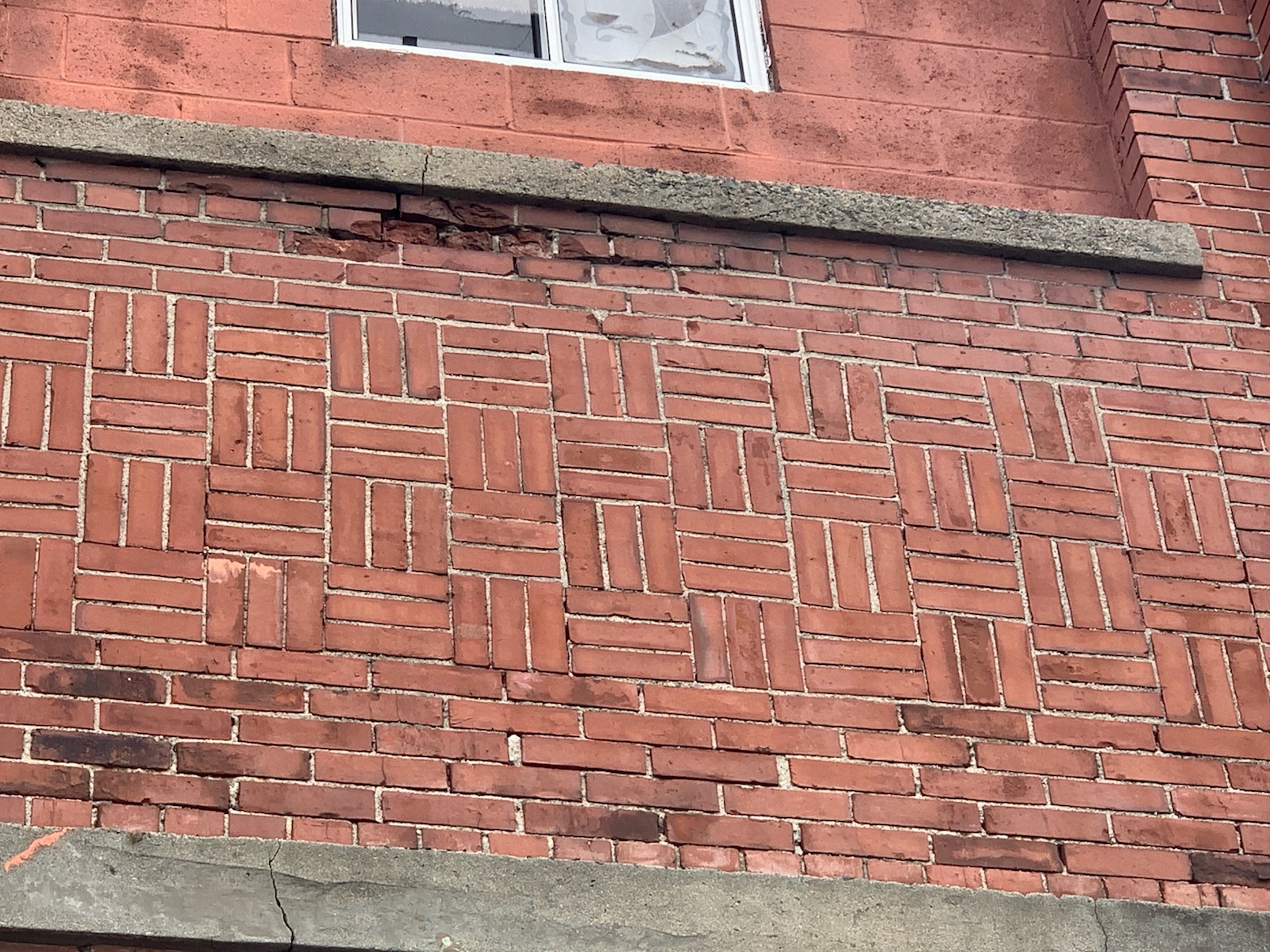
As we’ve mentioned here before, the Historical Commission is often asked for “site review” comments on potential redevelopment projects. Three of our commissioners attended a site visit at 970 Fellsway (near Amaranth and Myrtle Streets) last week and took these lovely photos. 

IMG_3754001

But why all the beautiful parquet brickwork at this old Glenwood industrial site across the street from BJs? What’s the story and is it worth preserving? 

Plans are available for public comment through the Office of Community Development at Medford City Hall.